


COUNTY archaeologists have provided conclusive proof that the plague which wiped out about 60 per cent of the European population in the 14th century was caused by fleas.
Human skeletons excavated from pits near Hereford Cathedral helped scholars at Worcestershire Historic Environment and Archaeology Service definitively confirm the plague’s origins.
The team were working as part of an international science project in partnership with the University of Mainz in Germany.
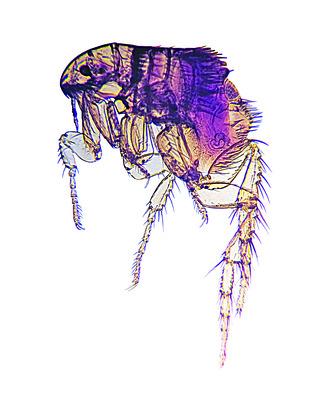
Their findings, published in an online journal, provide final proof that the plague spread via the transmission of the bacteria Yersinia pestis, which was passed on through bites from fleas carried by black rats.
This effectively rules out other common theories, including that the Black Death was actually a fever, and resolves a long-standing debate about the cause of the devastating disease.
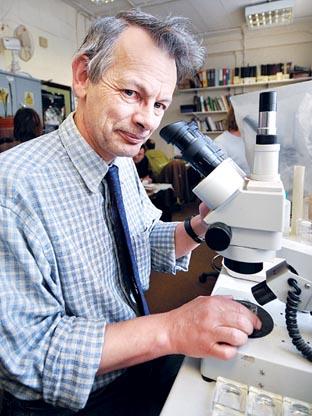
For Derek Hurst, Worcestershire County Council’s senior archaeological project officer, the findings are revolutionary.
He said: “This research settles a major aspect of controversy surrounding the Black Death in that it resolves the question of what was the causative agent. Excitingly, after years of debate, this advance in knowledge provides a firm base from which to finally answer remaining questions such as the exact route the disease took and the exact method by which people became infected.”
Fascinatingly, research was based on the DNA analysis of teeth from 76 human skeletons excavated from mass plague graves, including three pits discovered in the precincts of Hereford Cathedral.
The Hereford excavation project – which started back in 1993 – is the largest of its type ever undertaken in Herefordshire with the remains of more than a thousand individuals uncovered.
In the 14th century Hereford was a thriving market town and a centre for religious pilgrimage.
It was hit by three successive devastating outbreaks of plague in 1349, 1361 and 1369, which killed off large swathes of the population.
Now, from beyond the grave, some of these unfortunates have helped to unlock the secrets of the plague thanks to cutting-edge DNA technologies.
Tooth pulp from seven of the Hereford skeletons was tested along with samples taken from locations across Europe including Italy, Germany, France and the Netherlands, at the University of Turin in Italy.
These tests confirmed the presence of Yersinia pestis.
The Black Death was devastating for Worcestershire too. Mediaeval records show that up to 45 per cent of the church clergy died within the Diocese of Worcester while in the countryside up to half of all farmers died.
Tellingly, the figures do not even take into account the impact of the plague on children in the population.
The Black Death swept through Europe and Asia on several more occasions, the last of which is thought to have been the Russian plague of 1770-1772.
SEE TODAY'S COMMENT


Comments: Our rules
We want our comments to be a lively and valuable part of our community - a place where readers can debate and engage with the most important local issues. The ability to comment on our stories is a privilege, not a right, however, and that privilege may be withdrawn if it is abused or misused.
Please report any comments that break our rules.
Read the rules hereLast Updated:
Report this comment Cancel