

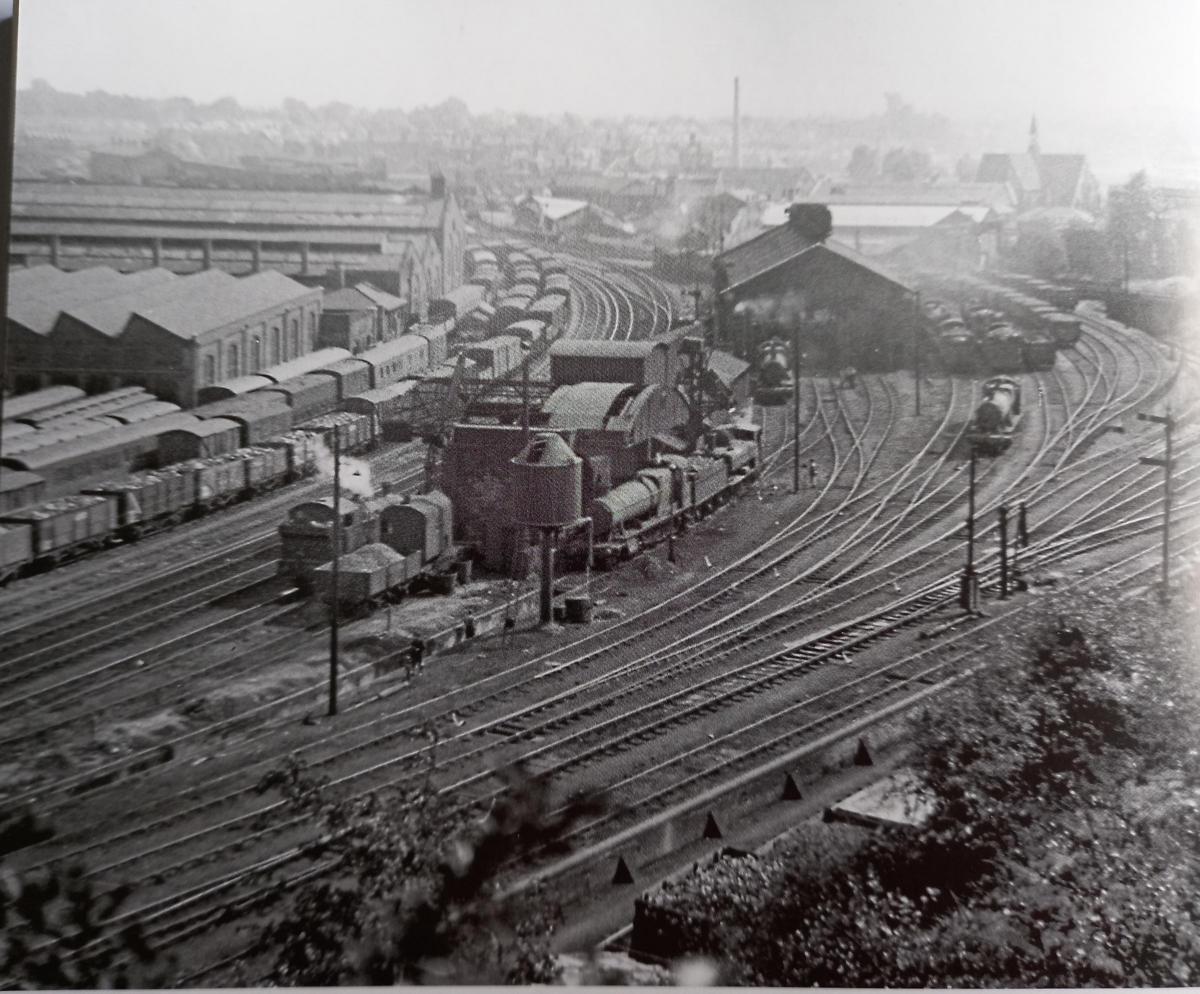


OVER the years there have been several events that have vied for the title “Battle of Worcester”. Prime among them being the ultimate set-to between Cavaliers and Roundheads in 1651, which sent Charles II fleeing to France and was probably Oliver Cromwell’s finest hour.
Then there was the city centre mass mayhem of 1969, when a 20-strong gang from Birmingham way descended on The Swan dive bar, which was beneath but not connected with Russell and Dorrell department store in High Street, seeking vengeance for one of their number being stabbed at a disco at the Bank House, Bransford, a few nights before.
Not the brightest sparks, many were arrested when they drove straight into a police roadblock on the M5 as they made a dash for home.
However, there has been a third, a lot less bloody, but no less important. It took place in 1844 and put Worcester centre stage in the Battle of the Gauges, as it became known. The combatants in this white collar conflict were two railway companies competing to bring lines to and through Worcestershire.

In the one corner stood the Oxford, Worcester and Wolverhampton Railway Company, which was backed by the Great Western Railway. In the other was the London and North Western Railway. Thus, in the writings of one scribe: “Worcester became the cockpit in which was fought out the battle of the rival systems of Stephenson and Brunel”.
Read more: Worcester's carbuncle car park
Robert Stephenson and Isambard Kingdom Brunel were the two great engineers of the Victorian era, but had differing ideas on the best width for railway tracks. Brunel advocated the GWR 7ft gauge, while Stephenson preferred the 4ft 8.5in of the North Western, a width derived from the pit rails in the north.

Until 1845 the broad gauge had not made much headway north of Gloucester and the control of the Severn Valley was expected to decide its future. Indeed Brunel was sufficiently energised to visit Worcester himself, where he addressed a packed Guildhall in 1844, advocating the GWR scheme.
The country’s best engineering and legal brains were engaged in the battle and after a series of meetings in Worcester the broad gauge won hands down and the OW&W emerged triumphant. But the cost of victory was financially crippling, about £1,000 for every mile of the company’s proposed line, and this led to disputes with GWR, which was providing the guarantee. By 1849 £2.5 million had been spent without any track being opened. Leading to the OW&W being christened “The Old Worse and Worse”.

Fortunately the appointment of AC (Alexander) Sherriff, a 40-year-old former Yorkshire school master who had retrained in railway management, turned the company’s fortunes around. Under his leadership order was restored out of chaos and when the line eventually arrived in 1850, Worcester grew into a really important railway centre.
Sherriff, after whom a street was named in the Shrub Hill area, twice served as mayor of Worcester and in 1865 was voted its MP, holding the seat until his death in 1878. Proving he was just the right sort of sheriff for this railway shootout.